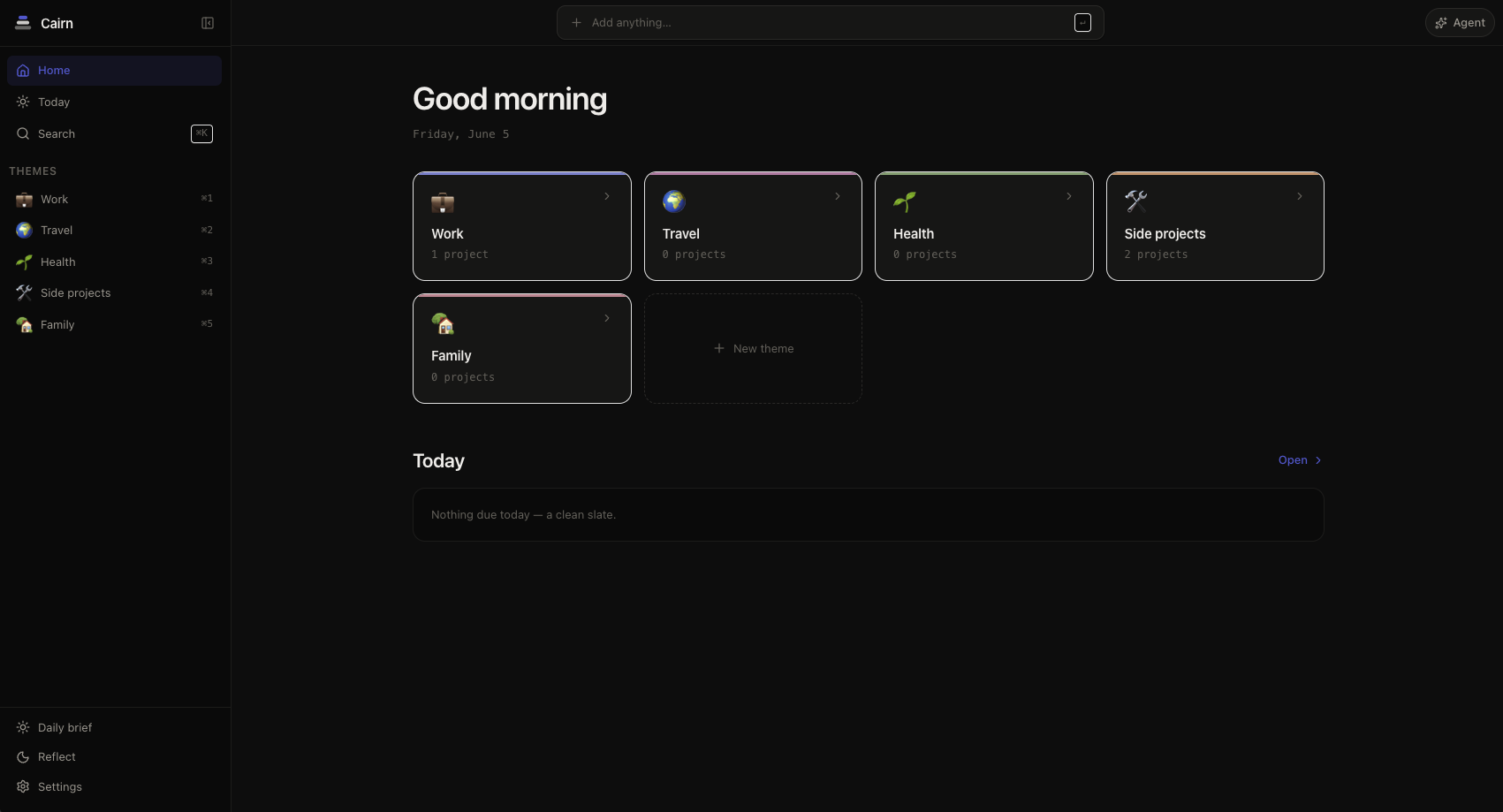
A cairn is a small stack of stones that marks the way — quiet, deliberate, and only there when you need it. That's the idea: a tool that helps you keep your footing without becoming another thing to manage.
[Placeholder — drop in the real story here: what problem Cairn solves for you, who it's for, and the one feature you're proudest of. I've laid out the structure so it's quick to fill.]
The good bits.
Memory, not just tasks
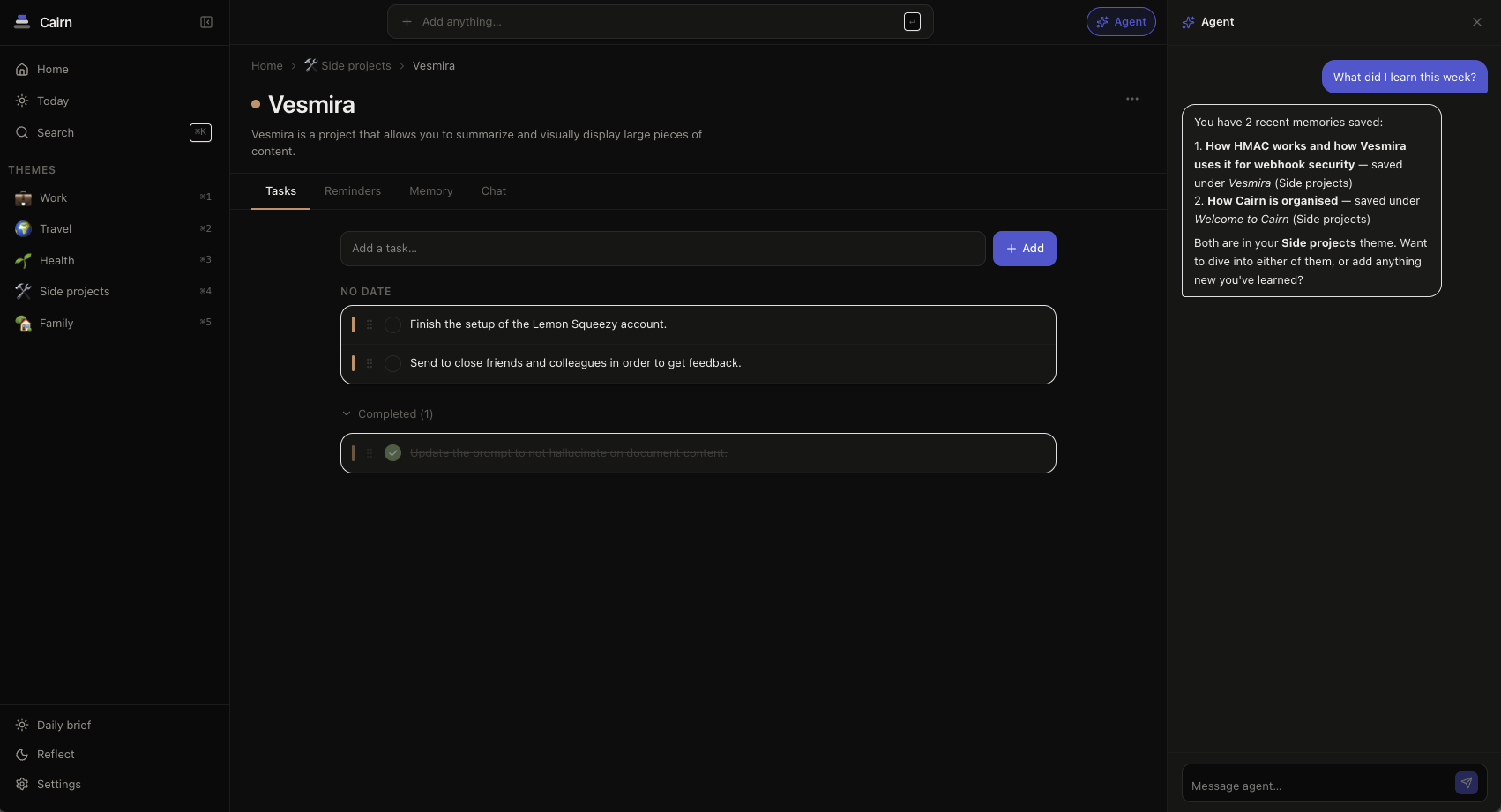
Most tools track what you need to do. Cairn also captures what you've learned — facts, insights, things worth remembering that don't fit a reminder. They live beside your tasks and the agent can surface them when you ask.
Quiet by default
No badges, no streak-guilt, no noise. Cairn shows up when it's useful and disappears when it isn't.
Sign in with Apple
Apple sign-in or a magic link — no password to remember, nothing to leak.
Yours alone
A personal tool, designed around one person's workflow rather than a committee's feature list.
Screens.
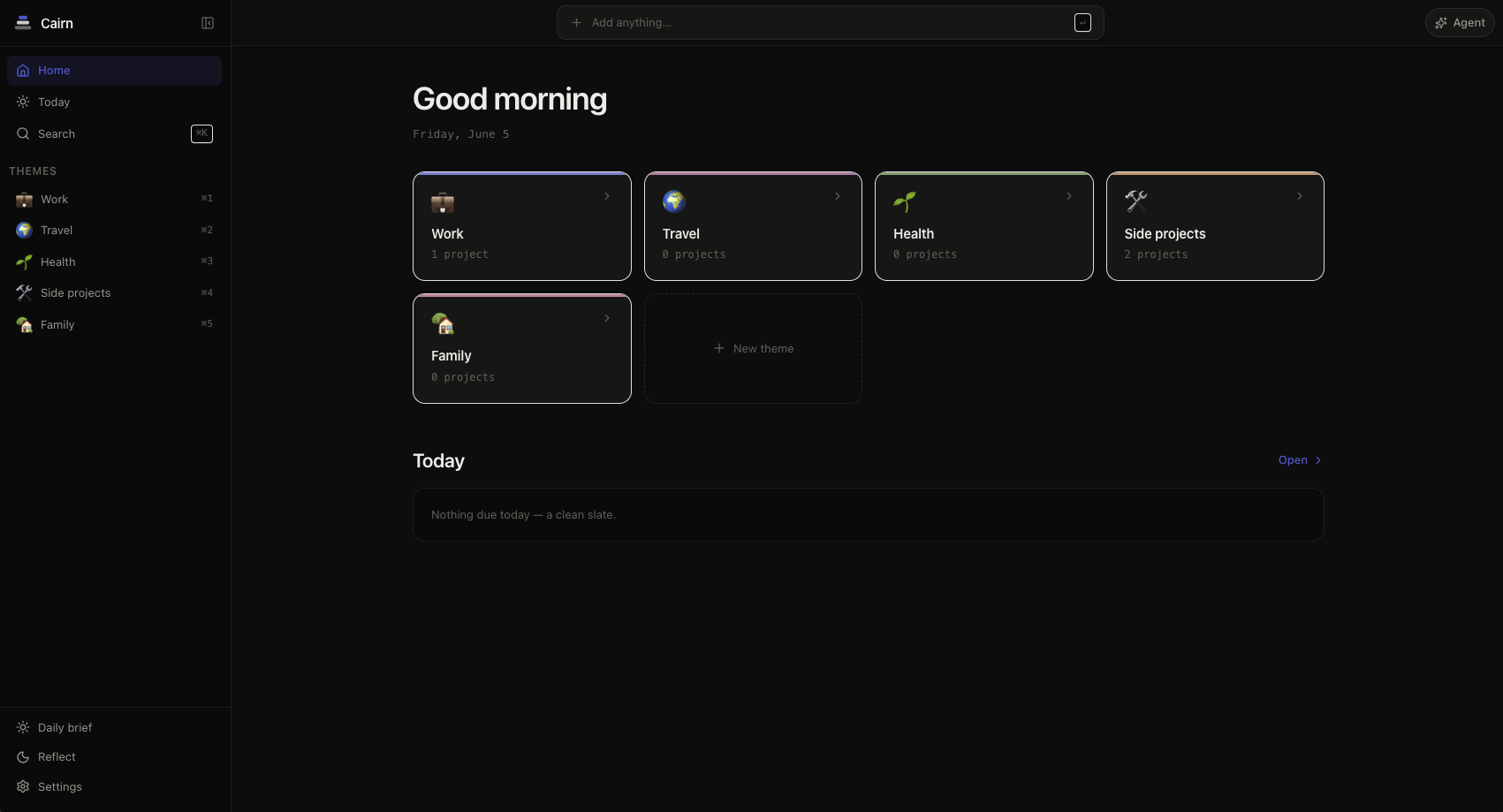
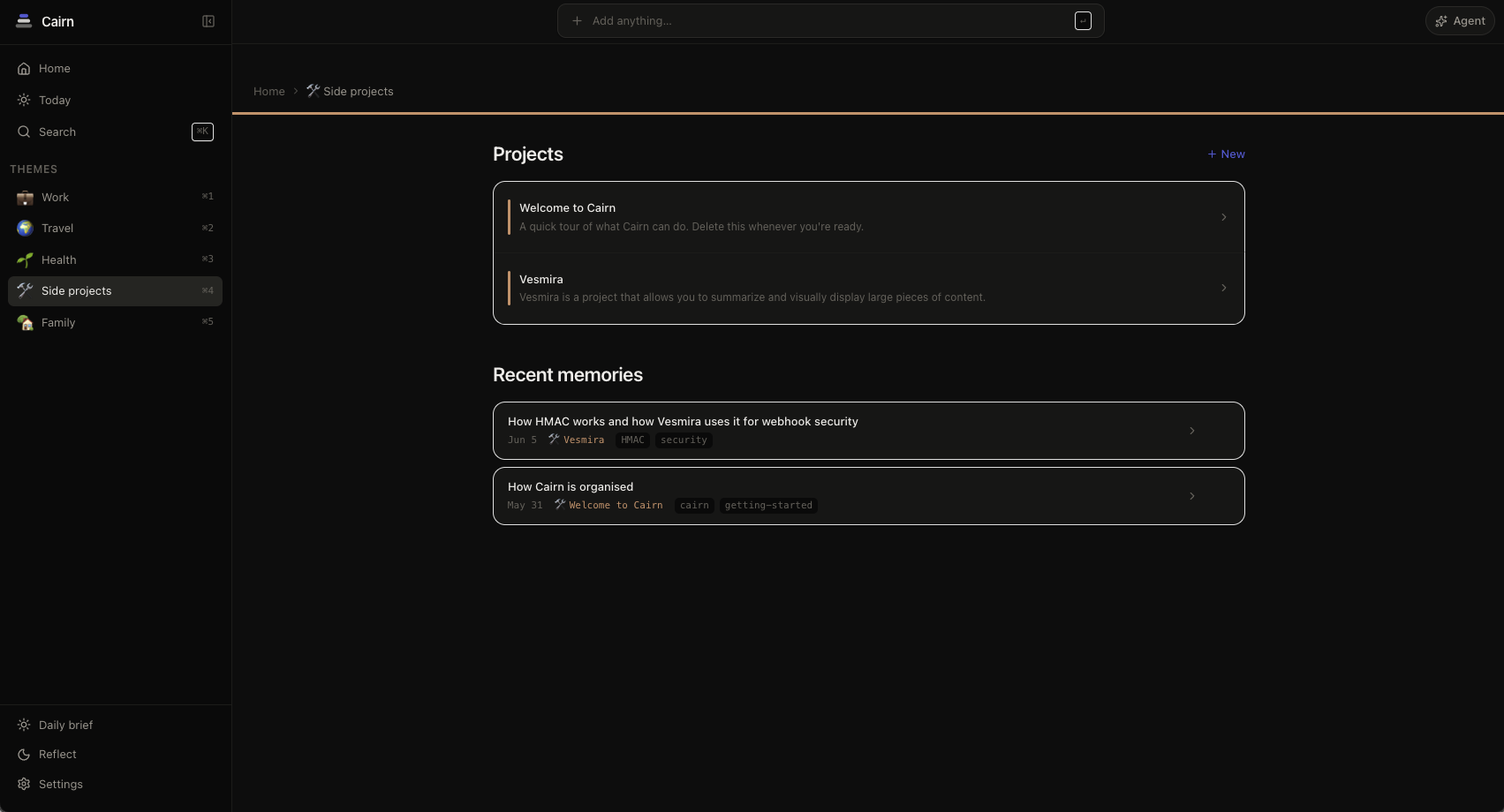
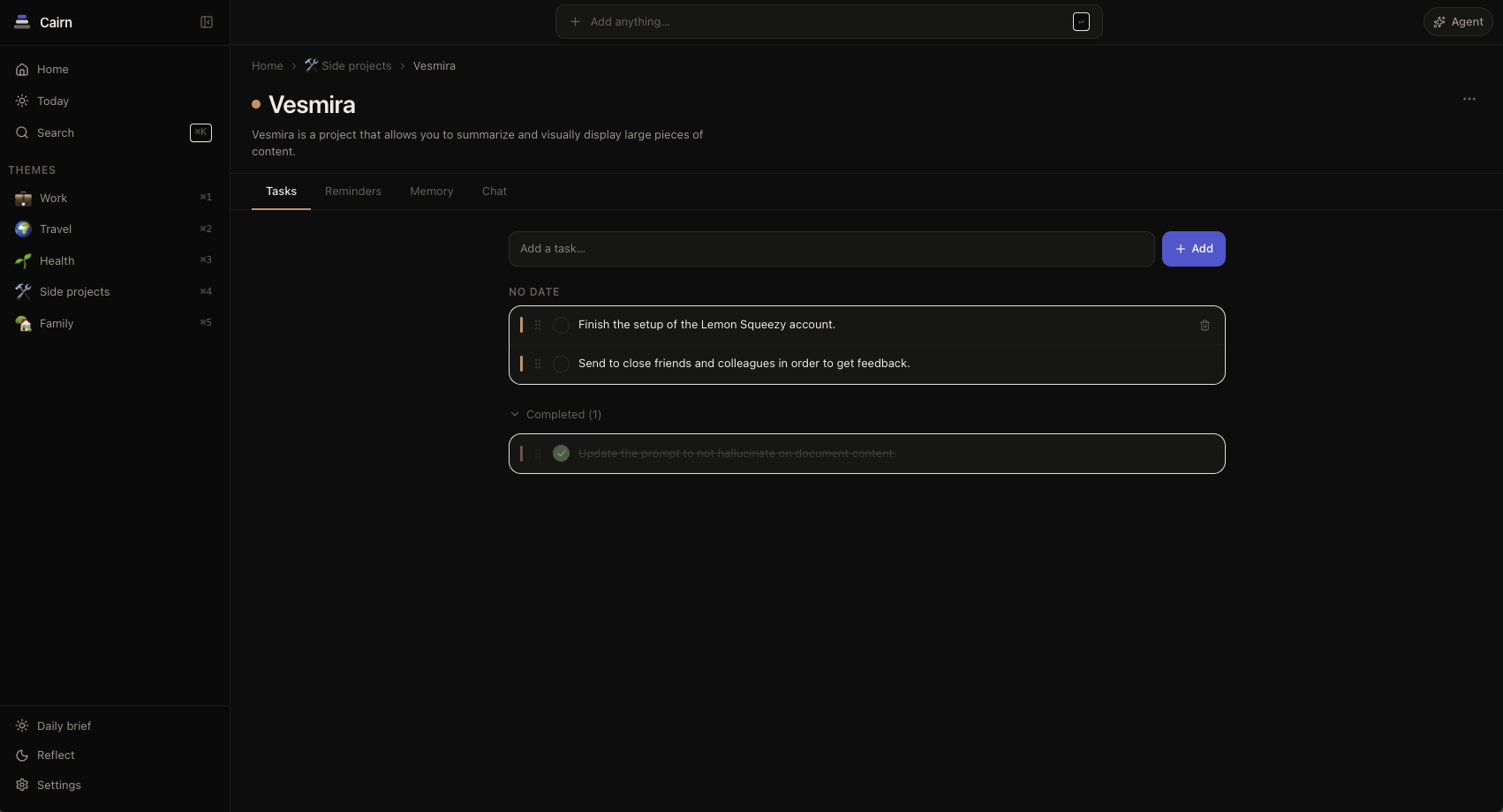
How it's built.
The web app and iOS app share a single TypeScript codebase — Next.js 16 on the web, Expo for iOS. Memories aren't stored as plain text: each one is embedded using OpenAI's text-embedding-3-small and indexed in Supabase via pgvector, so the agent retrieves context by semantic similarity rather than keyword search. The agent itself runs on Claude, and every row in the database is locked to the authenticated user via Postgres Row Level Security — data isolation that holds at the database level, not just in the app.
A quieter way to stay on track.
Cairn is live — take a look, or ask me where it's headed next.